
Overview
In this blog, R. Stanley Paving LLC explains why new asphalt needs time before sealcoating and how to recognize when both new and existing surfaces may be ready for an application. We’ll also look at what should be repaired first and when deterioration may require a different approach.
Highlights
- Why does sealcoating timing matter?
- How do you know new asphalt is ready for sealcoating?
- When should you sealcoat old asphalt?
Introduction
Sealcoating may look like a straightforward maintenance project: The asphalt has faded, so you apply a fresh protective coating. Yet pavement condition matters as much as appearance when deciding when to schedule the work.
Apply sealcoat before new asphalt is ready, and you can interfere with the pavement’s early aging process. Wait until an older surface has developed substantial deterioration, and sealcoat may no longer address what the pavement actually needs. So, where is the sweet spot? Let’s look at how pavement age, surface condition, existing damage, and weather can help determine whether it’s the right time to sealcoat.
Why Does Sealcoating Timing Matter?
Asphalt changes throughout its service life. Fresh pavement contains oils within its asphalt binder and needs time to cure. As the surface ages, exposure to sunlight, water, traffic, temperature changes, and vehicle fluids gradually affects its appearance and condition.
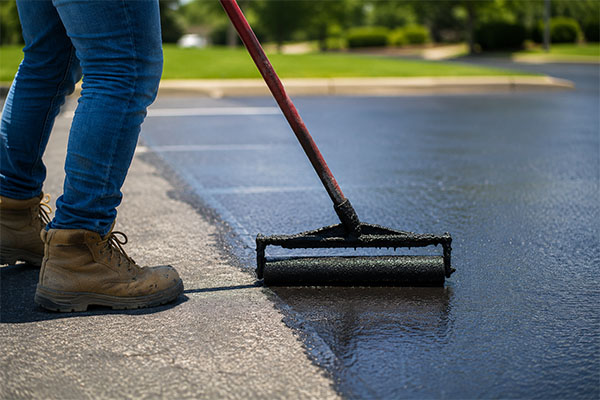
Sealcoating involves applying a protective coating over the asphalt surface to help shield it from environmental exposure and everyday wear. It’s a preventive maintenance treatment intended for asphalt that is in a suitable condition to receive it. Timing, therefore, begins with understanding the surface in front of you.
A recently paved driveway and a driveway that has been in service for several years present very different circumstances. Likewise, an older surface with manageable wear is different from pavement with widespread structural deterioration.
Can You Sealcoat New Asphalt Too Soon?
New asphalt’s rich, dark appearance can make immediate sealcoating seem unnecessary, but there’s also a technical reason to wait.
Fresh asphalt continues curing after installation. During this period, some of the lighter oils within the asphalt mixture need time to dissipate. Applying a surface treatment prematurely can interfere with that process and affect how well the sealcoat bonds to the pavement. This is one reason a paving contractor may recommend a waiting period after installation rather than immediately adding sealcoat.
How Do You Know New Asphalt Is Ready for Sealcoating?
There’s no universal timeline for when new asphalt becomes ready for its first sealcoat. Fresh pavement needs time to cure after installation, and while general waiting periods can provide a starting point, the number of weeks or months that have passed doesn’t tell the whole story. The conditions the asphalt experiences during that time can affect how quickly it cures.
As new asphalt cures and weathers, its appearance typically changes. The deep black of newly installed pavement gradually becomes lighter as the surface is exposed to sunlight, air, and weather. This change can indicate that the pavement is aging, but appearance alone doesn’t confirm that it’s ready for sealcoating.
Several factors can influence how new asphalt cures and when it becomes suitable for its first sealcoat:
- Temperature
- Sun exposure
- Asphalt mixture and installation
- Traffic
How Does Temperature Affect New Asphalt Curing?
Temperature affects the consistency of the asphalt binder. In hot conditions, the binder becomes softer, which can leave new pavement more susceptible to tire marks, scuffing, and impressions. Asphalt can also become substantially hotter than the surrounding air because its dark surface absorbs heat.
Cooler conditions cause the binder to become firmer. However, a stretch of cool weather doesn’t necessarily mean the asphalt has completed the longer curing process required before sealcoating. A contractor can consider the temperatures the pavement has experienced since installation rather than relying on how firm it feels on a particular day.
How Does Sun Exposure Affect New Asphalt Curing?
Sunlight exposes new asphalt to ultraviolet radiation and heats the pavement’s dark surface. Along with exposure to air, UV radiation contributes to oxidation, a process that gradually changes the asphalt binder and causes the pavement to lose some of its initial deep-black appearance.
Sun exposure can differ significantly between driveways. It can even vary across different areas of the same driveway. Pavement exposed to direct sunlight throughout the day experiences different surface temperatures and UV exposure than sections shaded by trees, buildings, or other structures. These differences are one reason color change alone isn’t a precise measure of sealcoating readiness.
How Do the Asphalt Mixture and Installation Affect Curing?
The properties of new pavement depend partly on the asphalt mixture used. Asphalt mixes contain aggregate combined with asphalt binder, and differences in their composition can affect characteristics such as density, flexibility, and resistance to deformation.
Installation also affects the finished surface. Asphalt must be placed and compacted correctly to create a dense, stable pavement structure. Factors such as compaction, pavement thickness, and the condition of the underlying base can influence how the driveway performs after installation. Because these characteristics vary from project to project, two newly paved driveways don’t necessarily reach the same condition on an identical schedule.
How Does Traffic Affect New Asphalt While It Cures?
Heavy traffic should generally be avoided on new asphalt while it cures. Although the pavement may be ready for normal vehicle use relatively soon after installation, frequent traffic and heavy vehicles can place additional stress on asphalt while the binder is still relatively soft. This can contribute to depressions, ruts, scuffing, and other surface changes.
Those effects matter when determining the timing of the first sealcoat. Sealcoating should be applied to pavement that has cured sufficiently and is in a suitable condition for the coating to bond properly. If traffic has caused deformation or surface damage during the curing period, those issues may need to be evaluated or addressed before sealcoating rather than simply applying the coating according to the original timeline.
Limiting heavy traffic during the curing period helps protect the new surface and reduces the likelihood of problems that could delay sealcoating. A contractor can assess how the pavement has responded to traffic and its overall curing progress before determining whether it’s ready for its first application.
When Should You Sealcoat Old Asphalt?
Sealcoating isn’t a one-time treatment. The protective coating gradually wears away under sunlight, water, traffic, temperature changes, and vehicle fluids, so periodic reapplication helps maintain that protection. Timing matters in both directions. Reapplying too frequently can create excessive layers of sealer that are more susceptible to cracking, peeling, or flaking, while waiting too long can leave the asphalt exposed long enough for deterioration to progress beyond what sealcoating can address.
Fading from deep black to gray is one visible sign of aging or a worn sealcoat, but color alone doesn’t determine when pavement should be resealed. The physical condition of the asphalt provides more useful information.
As pavement ages, watch for changes such as:
- Fading or a dry, weathered appearance
- Minor surface wear
- Small cracks beginning to develop
- Areas where a previous sealcoat has worn away
- Loose aggregate at the surface
- Oil or fluid stains
- Changes in how water drains from the pavement
Some of these conditions can indicate that it’s time to consider a new coat, while others may require attention before sealcoating. The important distinction is whether deterioration remains manageable or has progressed to the point where the pavement needs more substantial repair.
What Repairs Should Be Performed Before Sealcoating?
Sealcoat forms a protective layer over asphalt, but it doesn’t correct existing pavement failures. Before applying it, the surface should be cleaned, and defects that could interfere with the treatment should be addressed.
Depending on the pavement’s condition, preparation and repair may include addressing:
- Cracks that require filling or repair
- Potholes or broken pavement
- Loose or deteriorated asphalt
- Areas contaminated by oil or other fluids
- Localized pavement failures
- Drainage-related trouble spots
Each treatment has a different purpose. Crack repair addresses openings in the pavement, while patching replaces material in localized failed areas. More extensive repairs may be necessary where deterioration extends beyond the surface. Sealcoating comes afterward, providing a protective treatment for the asphalt that remains in suitable condition.
Consider a pothole, for example. Material has already been lost from the pavement, so spreading sealcoat over the area can’t restore what’s missing. The failed area needs to be repaired before a contractor determines whether sealcoating the surrounding pavement is appropriate.
When Is It Too Late To Rely on Sealcoating?
As asphalt deteriorates, the key question becomes whether the existing pavement is still worth preserving with preventive maintenance. Sealcoating can protect asphalt that remains stable and largely intact, but it can’t restore pavement that has experienced significant structural deterioration.
Large potholes, widespread or expanding cracks, crumbling pavement, significant depressions, loose material, or unstable areas can indicate that the damage has progressed beyond ordinary surface wear. Drainage problems can provide another clue. If water begins collecting in depressions or damaged areas where it previously drained away, the pavement may have problems that a surface treatment can’t address.
The extent of the deterioration matters. Localized damage may be repairable, allowing the affected areas to be restored before the remaining pavement is evaluated for sealcoating. When deterioration is widespread or affects the stability of large sections, more extensive repair or replacement may be necessary.
Get the Timing Right With Professional Sealcoating
Sealcoating timing depends on where your pavement is in its service life. New asphalt needs adequate curing time before its first application. Older asphalt needs reapplication before surface wear progresses into more substantial deterioration.
R. Stanley Paving LLC provides professional paving, asphalt maintenance, repair, and sealcoating services. Our team can assess your pavement and recommend the right time and approach for treatment.
For help determining whether it’s time to sealcoat your pavement, contact us at (845) 691-8565.